








OSFED (Other Specified Feeding or Eating Disorders) Treatment
Does your health insurance cover drug and alcohol treatment? Check your insurance.
We work with Most Insurance Providers
Virtue Recovery Center treatment centers work closely with most major insurance companies across the U.S. Our financial services staff will work with you and your insurance company to determine a financial plan to make treatment possible. Many insurance providers have deemed Virtue Recovery Center treatment centers “centers of excellence.”
Virtue Recovery treatment centers are proud to be recognized by multiple insurance providers for our leadership, best practices, research, support, and training in the eating disorder treatment field.
Click the button below to see if your insurance covers treatment of eating disorders.
What is OSFED (Other Specified Feeding or Eating Disorders)?
Learn More About Eating Disorder Treatment
FREE ASSESSMENT
Get immediate treatment help now. Contact us to schedule a free assessment with a licensed clinician. 100% safe & confidential.
INDIVIDUAL COUNSELING for OSFED
Individual counseling is one of the key tools in helping people overcome OSFED. In these one-on-one sessions, you’ll work with a therapist specializing in eating disorders. Together, you’ll talk through the thoughts, emotions, and behaviors connected to your eating disorder. This is a safe space to open up about your struggles without judgment. Your therapist will help you explore why certain patterns have developed and help you find healthier ways to cope. Treatment modalities for OSFED usually consist of cognitive behavioral therapy (CBT), dialectical behavioral therapy (DBT), and motivational interviewing (MI) therapy.
Over time, you’ll work on changing negative behaviors and building new skills to manage triggers that lead to disordered eating. Individual counseling is personalized, so your treatment plan will focus on what you need to heal. It’s not a quick fix, but with patience and support, these sessions can help you gain control over your eating behaviors and lead to long-lasting recovery.
RESIDENTIAL TREATMENT for OSFED
Residential treatment at our luxurious Las Vegas facility offers a safe and structured environment where you can focus entirely on your recovery. In this program, you’ll live at our facility and receive round-the-clock care from a team of experts who specialize in eating disorders. The program provides a daily routine filled with therapy sessions, group activities, and medical care that help you learn to manage your OSFED symptoms. By being in a supportive, controlled environment, you can fully dedicate yourself to the healing process without the distractions or stress of daily life.
In residential treatment, you’ll also have the opportunity to interact with others facing similar challenges. These connections help you build a sense of community and remind you that you’re not alone in your journey. With both individualized and group support, residential treatment provides the resources you need to address the root causes of your OSFED and develop the skills for lasting recovery.
What our Clients Says About Virtue Recovery Center
FAMILY STYLE treatment for OSFED
Family support is often a key part of recovery from OSFED, and our family-style treatment helps bring loved ones into the healing process. Through family therapy sessions, we work with you and your family to improve communication and strengthen relationships. These sessions help your family better understand your eating disorder and learn how to provide the right kind of support. With guidance, families can become a powerful source of encouragement and stability during recovery.
Family therapy doesn’t just focus on the person receiving treatment—it’s also about helping family members cope with their feelings and concerns. Together, we work to create a supportive home environment that fosters healing. By involving the people closest to you in your recovery, family-style treatment ensures you’ll have a strong support network both during and long after you leave the program.
Trauma-informed care for OSFED
For many people, trauma plays a big role in the development of OSFED. Our trauma-informed care approach recognizes that past traumatic experiences can contribute to unhealthy eating behaviors. In trauma-informed care, we make sure that treatment is done in a way that feels safe and supportive, focusing on both your physical and emotional needs. This approach helps you explore how trauma may have affected your relationship with food and body image.
Trauma-informed care allows you to work through past experiences at your own pace. We understand that addressing trauma can be difficult, so we provide a compassionate, judgment-free environment where you can feel safe. By addressing both trauma and eating disorder behaviors, trauma-informed care helps you build healthier coping mechanisms and sets the stage for long-term recovery.
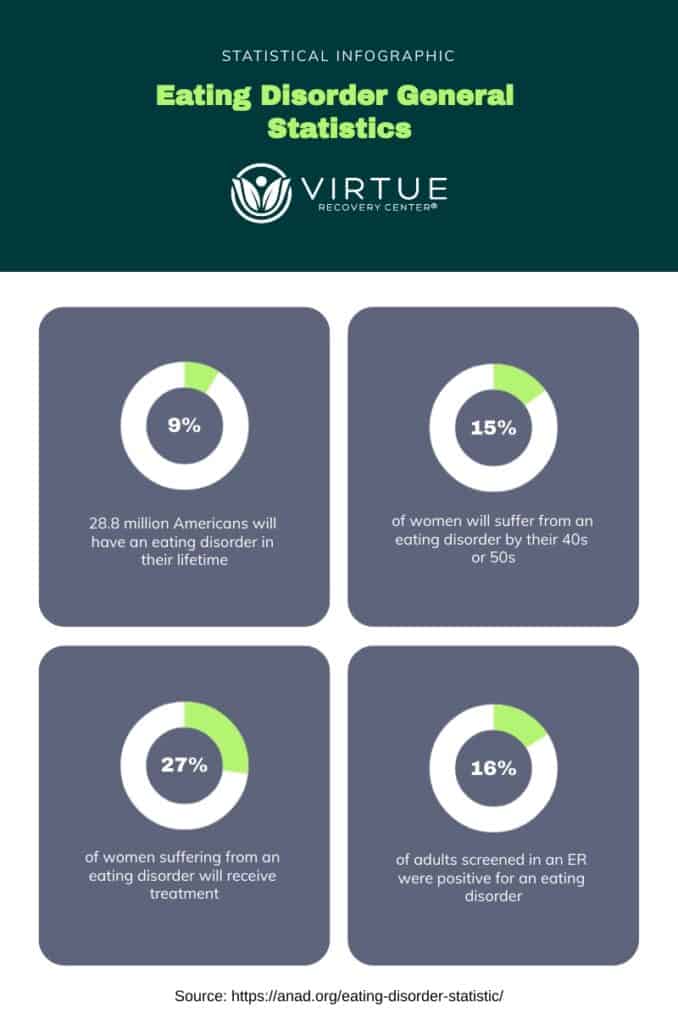
Eating Disorder General Statistics
Signs of OSFED can include extreme worry about weight, disordered eating patterns, or purging without bingeing.
OSFED includes symptoms from various eating disorders but doesn’t fit into one specific category, like anorexia or bulimia.
Yes, OSFED is just as serious and can lead to severe physical and emotional health problems if untreated.
With proper treatment and support, many people recover from OSFED and develop a healthier relationship with food.

If you’re experiencing disordered eating behaviors that don’t fit into other eating disorder categories, you may have OSFED. A healthcare professional can provide a diagnosis.
The exact cause isn’t known, but it can be influenced by factors like trauma, low self-esteem, societal pressures, or genetics.
A doctor or therapist will assess your symptoms and behaviors to see if they meet the criteria for OSFED.
Treatments like individual counseling, group therapy, and nutritional counseling are often used to treat OSFED.
Treatment length varies depending on the individual, but recovery is a gradual process that can take months or years.
OSFED can affect people of all ages, but it’s most common in teens and young adults.
Yes, OSFED is considered a mental health disorder related to food, body image, and emotions.
Yes, OSFED can cause physical issues like heart problems, digestive issues, and emotional distress.
Yes, outpatient treatments, such as individual therapy and group counseling, are available for those not needing hospitalization.
Offer understanding, encourage professional help, and avoid making comments about their appearance or eating habits.
Reach out to a healthcare provider or eating disorder specialist to discuss your symptoms and treatment options.

Anorexia Nervosa
Evidence-based treatment to restore health and overcome restrictive eating and body image struggles.

Bulimia Nervosa
Compassionate care to break the cycle of bingeing, purging, and harmful eating behaviors.

Orthorexia Nervosa
Specialized treatment to heal the obsession with “clean” or “pure” eating.

Binge Eating
Comprehensive therapy to address compulsive overeating and build a healthier relationship with food.

Compulsive Overeating
Supportive programs to reduce emotional overeating and promote long-term recovery.

Rumination Disorder
Targeted treatment for chronic regurgitation and re-chewing behaviors.

OSFED
Personalized care for complex eating disorder symptoms that don’t fit one category.

ARFID
Treatment designed to help overcome restrictive eating and food avoidance.

UFED
Compassionate support for eating disorder symptoms that don’t meet specific diagnostic criteria.

Laxative Abuse
Safe, effective treatment for laxative misuse and its physical and emotional consequences.

Diabulimia
Integrated care for individuals with Type 1 diabetes who struggle with insulin restriction and eating disorder behaviors.

Body Dysmorphia
Holistic treatment to address obsessive thoughts and behaviors about perceived physical flaws.
Glossary of Key Terms in OSFED Treatment
OSFED stands for Other Specified Feeding or Eating Disorder. It is a diagnosis given when someone has serious eating disorder symptoms that don’t neatly fit the criteria for anorexia, bulimia, or binge eating disorder.
Atypical anorexia describes when someone has all the symptoms of anorexia nervosa, such as food restriction and body image concerns, but their weight is not below the expected range. The health risks can be just as severe as classic anorexia.
Subthreshold bulimia occurs when someone has bingeing and purging behaviors but at a lower frequency or shorter duration than required for a bulimia diagnosis. Even at this level, the behavior can cause significant harm and distress.
This condition involves episodes of binge eating that do not meet the full diagnostic frequency or duration for binge eating disorder. It can still impact physical health and emotional wellbeing.
Purging disorder is when someone regularly engages in purging behaviors, such as vomiting or misuse of laxatives, without binge eating. This pattern is included under OSFED and requires specialized treatment.
Night eating syndrome is characterized by consuming a large portion of daily food intake during the evening or after waking at night. It is often linked with disrupted sleep patterns and emotional distress.
Body image disturbance refers to a distorted perception or dissatisfaction with one’s body shape or size. It is a common factor across many OSFED presentations and can drive harmful eating behaviors.
Individuals with OSFED often have co-occurring mental health issues such as anxiety, depression, or trauma. Addressing both OSFED and co-occurring conditions is critical for full recovery.
This approach involves a team of professionals—including therapists, physicians, dietitians, and psychiatric providers—working together to address all aspects of the disorder. It is the standard of care for OSFED.
Relapse prevention teaches clients to identify triggers, manage stress, and maintain progress after treatment. Because OSFED presentations vary, relapse prevention is highly individualized.

Cognitive Behavioral Therapy (CBT)
CBT helps clients identify and change negative thought patterns and behaviors that fuel addiction or eating disorders, replacing them with healthier coping strategies.

Dialectical Behavioral Therapy (DBT)
DBT teaches emotional regulation, distress tolerance, and mindfulness skills, supporting recovery for individuals struggling with substance use and eating disorders.

Motivational Interviewing (MI)
MI is a client-centered approach that helps individuals explore and strengthen their own motivation for positive change, making it a powerful tool in eating disorder and addiction recovery.

Psychoeducation Group Therapy
These groups provide education on addiction, mental health, and recovery strategies, empowering clients with the knowledge and tools they need to maintain long-term wellness.

Process Group Therapy
In process groups, clients share experiences and gain support while exploring emotions and behaviors in a safe, therapeutic environment that fosters healing and connection.

Meditation Therapy
Meditation promotes relaxation, stress reduction, and emotional balance, helping clients manage cravings, anxiety, and triggers throughout recovery.

Music Therapy
Music therapy uses rhythm, lyrics, and sound to promote self-expression, reduce stress, and support emotional healing in addiction and eating disorder recovery.

Yoga Therapy
Yoga integrates breathwork, movement, and mindfulness to strengthen the mind-body connection, reduce stress, and support physical and emotional recovery.

Art Therapy
Through creative expression, art therapy allows clients to process complex emotions, reduce anxiety, and explore nonverbal ways of healing during treatment.

Family Therapy
Family therapy helps rebuild trust, improve communication, and engage loved ones in the recovery process.

Therapy & Counseling
Counseling provides a safe, supportive space to address the root causes of addiction and eating disorders through personalized, evidence-based therapy.

Relapse Prevention Therapy
This therapy teaches clients how to recognize triggers, manage cravings, and maintain long-term recovery from addiction and eating disorders.

12-Step Group Therapy
Rooted in the proven 12-Step model, these groups provide structure, accountability, and peer support to guide clients toward long-term sobriety.