
Outpatient Treatment
- Three levels: PHP, IOP and standard outpatient
- You live at home and come in for scheduled sessions
- In person in Las Vegas, in a room with other people
- Most people step down into it from detox or residential

Clinically reviewed by
Dominic Perry, LCSW, LCADC-S, Executive Director, Outpatient
Last reviewed August 2026
Check your insurance

Free & confidential • No obligation • Usually answered within minutes





How it works
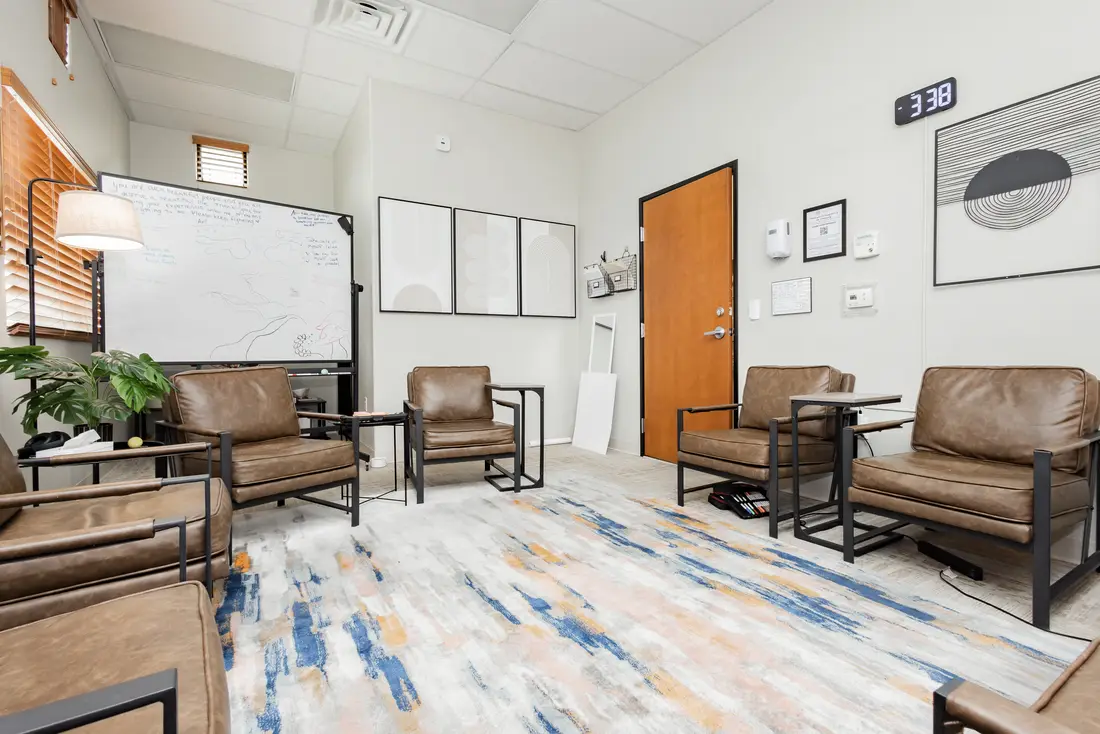
Our outpatient programs happen in a room, not on a video call.
You come to the building, sit in a group, and go home afterwards. For most people that is the point. Leaving the house and arriving somewhere at a set time is doing real work before the session even starts.
The clinical work is the same work you would get living on site: individual therapy, group therapy, relapse prevention, mental health care. What changes is how much of your week it takes and where you sleep.
The levels
PHP, IOP and standard outpatient: which one is which.
They differ by intensity and by how much of your week they take. Most people move down through them as they stabilize rather than picking one and staying there.
Partial hospitalization
Close to the structure of residential treatment, without living on site. Usually the first step down after residential, or a starting point for someone who needs daily structure but has a stable home to return to each night.
Intensive outpatient
The level most people mean when they say they need treatment but cannot stop working. Real clinical hours, arranged so that a job, a course or school pickup still happens.
Standard outpatient
Continuing care once the intensive phase is behind you, or a starting point where the addiction is milder and support at home is strong. This is the level people stay in longest.
Step-down and continuing care
Discharge day is when treatment gets tested, not when it ends.
Residential works partly because it removes you from everything. Outpatient is what happens when those things come back: the commute, the kitchen, the friend who still uses, the Friday that used to mean something else.
Continuing into outpatient after residential is one of the clearest predictors of recovery holding. Stepping down gradually, residential to PHP to IOP to outpatient, means the support tapers as your life reloads, instead of stopping on a Tuesday.

Choosing a level
Is outpatient the right level for you?
Outpatient is not a lesser version of treatment. It is a different shape, and the assessment exists so you start at the level that actually fits.
- You are stepping down from detox or residential treatment
- Home is stable, and the people in it are on your side
- The addiction is milder, or caught earlier than most
- Work, study or caring responsibilities cannot simply stop
- You have somewhere safe to sleep that is not where you used
Most people who start here begin at PHP or IOP and step down as things hold. You are not committing to one level for the whole of it.
- Withdrawal needs medical supervision first
- Home is where the using happens, or where the supply is
- Previous outpatient attempts did not hold
- The mental health side needs daily clinical eyes on it
- Being away from everything is the only thing that has ever worked
If that is you, say so during the assessment. Starting at the right level costs less than starting again.
What it includes
The same clinical work, on a different schedule.
Every level includes these. What changes between PHP, IOP and outpatient is how many hours of them you get each week.
Individual therapy
One-to-one sessions with your therapist, on the material that is actually yours rather than the group’s.
Group therapy
The part most people dread and then rate highest. Other people at various stages of the same thing.
CBT, DBT, EMDR and MI
The clinical approaches behind the sessions, matched to what your assessment shows rather than applied uniformly.
Relapse prevention
Identifying your triggers, planning for them concretely, and rehearsing what you do when it happens anyway.
Dual-diagnosis support
Anxiety, depression and trauma treated alongside the substance use, not referred out to somewhere else.
Family involvement
Sessions that include the people you live with, because they are part of how this holds or does not.
Drug testing is part of outpatient care. Not as a punishment or a gotcha, but as an accountability structure that a lot of people say made the difference, and as clinical information that shapes your plan.
Where it runs
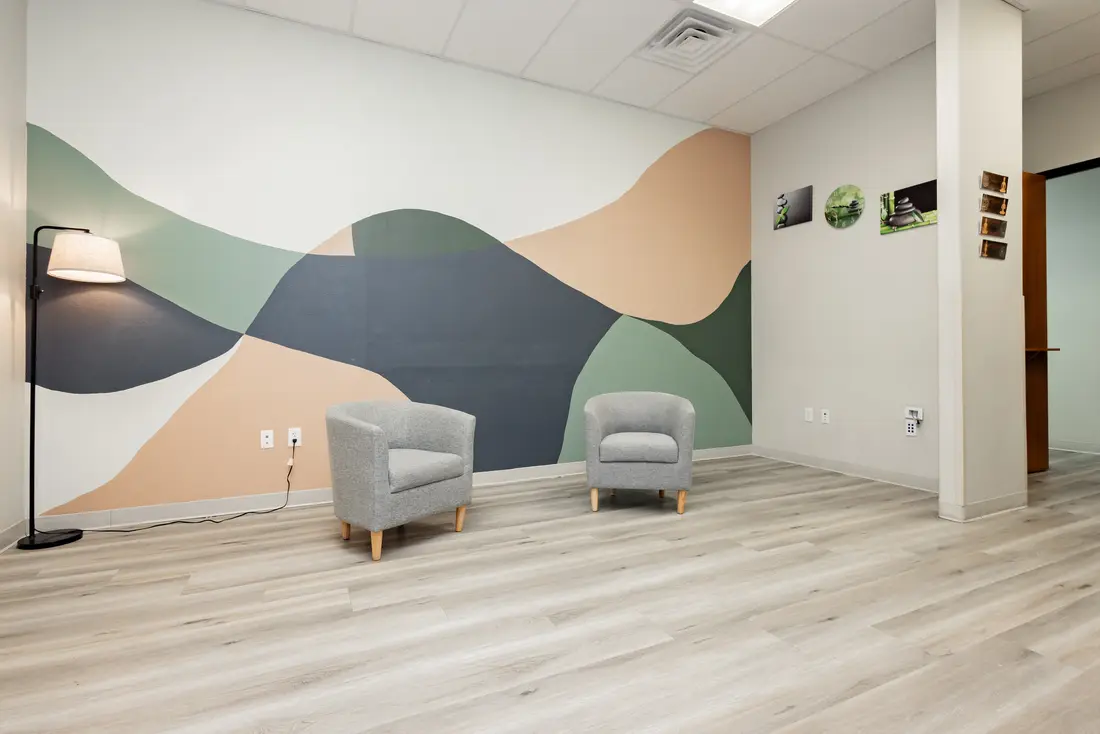
Outpatient runs at our Las Vegas program on Montessouri Street.
It is our dedicated outpatient facility, running both PHP and IOP. Because outpatient is in person, the building you can actually get to matters more here than it does for residential care.
At our residential locations, outpatient is handled through step-down planning or referral as you get closer to discharge. Ask on the call and admissions will tell you which applies to you.
In their words
What people say about outpatient at Virtue

The therapists were very engaging and compassionate to each individual's needs. One on ones were extremely helpful. And the group sessions were very supportive and informative. This really helped me through some low and trying times in my life.
Las Vegas, NV · Google
I went here for recovery and it was the best decision I ever made. The rooms were clean, the food was great, and the staff went above and beyond to help out. If anyone is looking for help Virtue is the best first step towards a happy clean life.
Las Vegas, NV · Google
This is a great place for helping people with their recovery from substance abuse and mental illness. They have a lot of people supporting you from counselors, nurses and therapists. Everyone is very genuine in their desire to help you in any way that you need. Highly recommend.
Las Vegas, NV · Google
This recovery center is the best in town. All staff here have been nothing but great. Always asking how you are doing, food when you need it and you get to meet great people in recovery. The best thing I've done is come here and get sober.
Las Vegas, NV · Google
Exactly what I needed. The people here saved my life. This past month I really feel like I've grown as a person. I felt very comfortable and got along with everyone there.
Las Vegas, NV · Google
Hi. Just want to say hands down the most caring people I met. Both inpatient and outpatient staff and counselors I honestly believe they all care for us. Thank you Mario, Patricia, Steven, Dominique, Liz, Adam, Derek, Leti, Brittany, Vishon, Greer. You are all very amazing and caring. You should be proud of yourself for what you do.
Las Vegas, NV · Google
Reviews are unedited and pulled from Google. They reflect individual experience and are not a guarantee of outcome.
Common questions
Questions people ask about outpatient
Anything not answered here, ask during the assessment. It is confidential and commits you to nothing.
(866) 461-3339- What are the different levels of outpatient treatment?
- Outpatient addiction treatment comes in three main levels that differ by intensity: partial hospitalization (PHP) is the most intensive, usually five to six days a week for several hours a day; intensive outpatient (IOP) is moderate, about three days a week for a few hours; and standard outpatient is the least intensive, often weekly sessions. Many people step down through these levels as they progress in recovery. A clinical assessment sets your starting point, and it is reviewed as you go.
- What is the difference between inpatient and outpatient treatment?
- The main difference is where you stay: inpatient (residential) treatment means living at the facility with 24/7 care, while outpatient treatment means living at home and attending scheduled sessions. Outpatient works well for people with a stable, supportive environment, a milder addiction, or those stepping down after residential care, and it lets you keep up with work and family. Residential is better when someone needs to be fully removed from triggers or has severe or high-acuity needs.
- Can I keep working during outpatient treatment?
- Yes. That is one of outpatient care’s biggest advantages, especially with IOP and standard outpatient. Because you live at home and attend scheduled sessions, and some programs offer evening options, outpatient is designed to fit around work, school, and family. It lets you get real, structured treatment while maintaining your daily responsibilities.
- Should I do outpatient after residential treatment?
- For many people, yes. Continuing into outpatient care after residential is one of the most important factors in lasting recovery. It keeps you connected to therapy, support, and relapse-prevention tools as you transition back to daily life, when old triggers return. Stepping down gradually, from residential to PHP to IOP to outpatient, helps recovery hold rather than ending abruptly at discharge.
- How do I know which level of outpatient care I need?
- It depends on the severity of the addiction, your home environment, any co-occurring conditions, and whether you are stepping down from more intensive care. PHP suits those needing significant daily structure; IOP fits people balancing treatment with work or school; standard outpatient works for maintenance or milder cases. A quick, confidential assessment is the best way to find your fit, and our team will guide you.
- Does insurance cover outpatient treatment?
- Most commercial and PPO plans cover medically necessary outpatient treatment, including PHP and IOP. Coverage depends on your specific plan, so the simplest next step is a free, confidential insurance verification.
You are allowed to ask
If you are calling for someone else
Most people who call us are calling about someone they love. You can ask about the options and check their insurance on their behalf, and it stays a conversation until you decide otherwise.
Related reading
Insurance
We accept most major insurance plans.









And most PPO plans. Coverage varies by plan and by facility, so if your carrier is not shown, ask rather than assume.
- Free, and there is no obligation at the end of it
- Usually answered within minutes during the day
- You can check on behalf of someone else
- Admissions answers the phone 24 hours a day
- No insurance? Ask about private pay options. Nobody is turned away without knowing their next step.
Check my insurance coverage
100% confidential · No commitment required
Call us and start with an assessment, not a guess.
Describe your week: the job, the people at home, what you have already tried. One conversation settles which level you start at, with no obligation at the end of it.
Confidential. No obligation. Someone answers, 24 hours a day.