
Meal Support in Eating Disorder Treatment
Supervised, structured eating alongside clinical staff and a registered dietitian, at our two Las Vegas locations. It is part of treatment rather than a test you can fail.
- You choose your own meals, a week ahead, and again at the counter
- Clinical staff are at the table with you, not watching from across the room
- Allergies and restrictions are recorded before you arrive, not at the first meal
- Residential at Corbett and outpatient at Montessouri, in Las Vegas
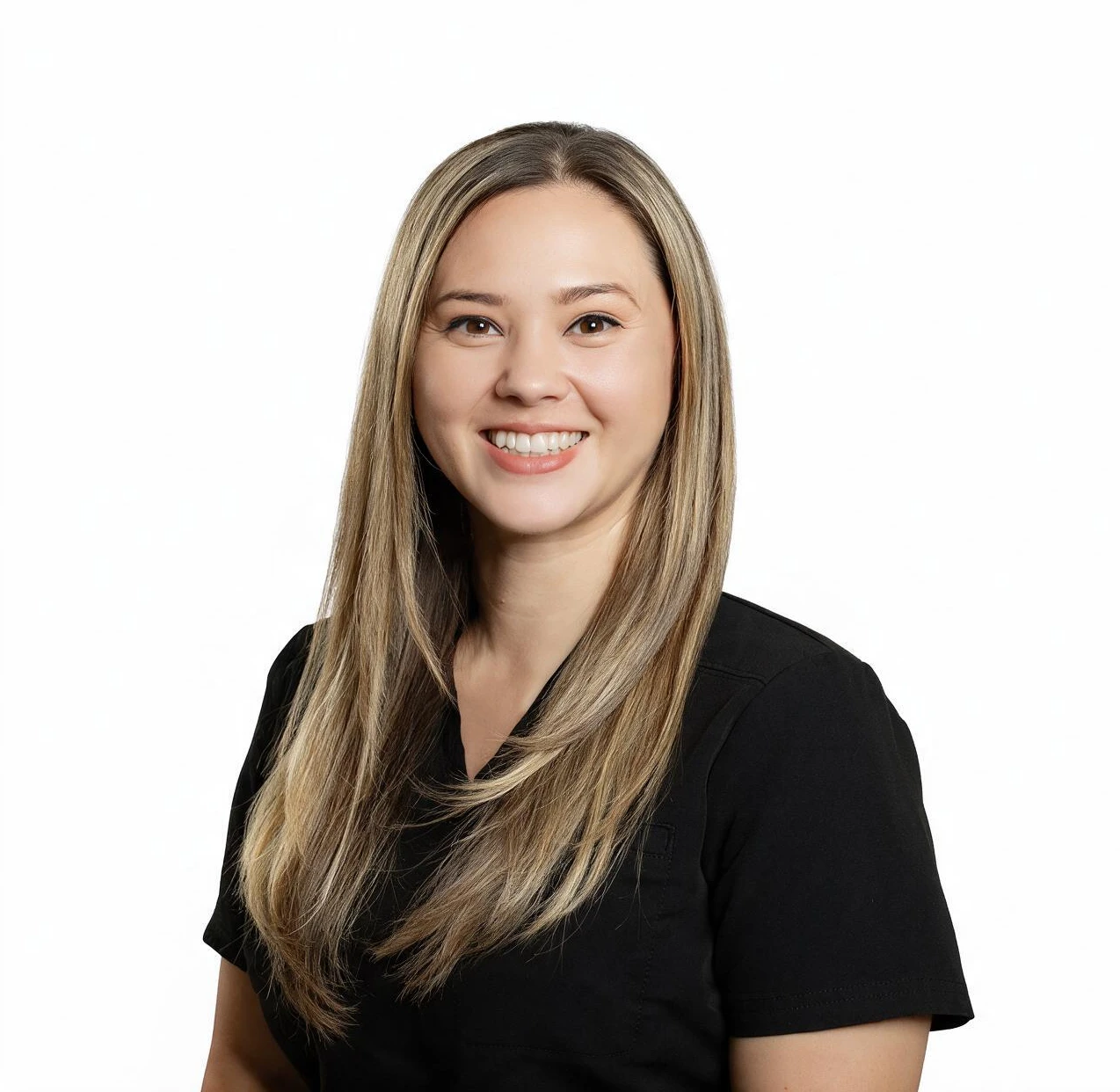
Written by
Laura De Fiesta, MS, RD, LD, Director of Nutrition and Culinary Services
Last reviewed August 2026
Check your insurance

Free & confidential • No obligation • Usually answered within minutes




The thing nobody expects
You choose your own meals, a week ahead.
Most people arrive at our Corbett campus expecting a tray to be put in front of them. What actually happens is a meal planning day every Monday, where you select your own meals for the week ahead.
Service is cafeteria-style, so you choose again at the point of eating rather than being handed something decided for you days earlier. There is a salad bar and a snack bar, and food is accessible outside mealtimes.
The point of all of it is the same. There are no surprises about what will be on your plate, and for a lot of people that single fact is what makes the rest of treatment possible to contemplate.
- You pick your meals on Monday, for the week ahead
- You choose again at the counter, cafeteria-style
- Salad bar and snack bar, accessible outside mealtimes
- Your own shelf-stable food can be stored
All meals and snacks are provided. What appears on your plate is something you decided.
What mealtimes involve
Structure, and people who know what they are doing.
Meals happen with clinical staff present. Not standing over you, but present, because eating is the difficult part and it is easier with support than without it.
Staff at the table
Clinical staff are part of mealtimes rather than observers of them. Their job is to make the meal possible, not to assess how you did.
Everything provided
All meals and snacks are included, and there is no expectation that you arrange food for yourself while you are here.
Food between meals
A salad bar and a snack bar, with access outside mealtimes. Food is not something that appears three times a day and then disappears.
Your own storage
Personal shelf-stable food storage is permitted at the Corbett campus, so familiar things can stay with you.
The part people do not say out loud
If eating in front of other people frightens you.
It is one of the most common reasons people put off treatment, and it is almost never said directly. The idea of sitting at a table, being watched, being expected to finish, is for a lot of people more frightening than the disorder itself has become.
That fear is expected here. It is not a sign you are not ready, and it is not something you have to have solved before you arrive. It is precisely what the clinical team and the dietitian work with.
A meal that is difficult is not a failure. It is information, and it gets worked through with you rather than logged against you. Nobody is left to manage it alone.
Meals are supported and supervised. You will not be forced to eat, and mealtimes are not a test of compliance.
Medical supervision exists because the body's response to renewed eating can need monitoring. That is a clinical safeguard described by the NIH, and a reason the medical team is involved rather than something to be afraid of.
If you are in crisis, call or text 988 at any hour.
Who is there
The dietitian is not just a weekly appointment.
You have one-to-one sessions with a registered dietitian, and separately, dietitian and nutrition techs are present in the milieu continuously: at meals, between them, in the ordinary hours of the day rather than only in scheduled time.
That continuity matters more than the sessions do. The difficult moment with food rarely happens at two o'clock on a Thursday because that is when the appointment was.
Nutrition and culinary services across the network are led by Laura De Fiesta, MS, RD, LD, Director of Nutrition and Culinary Services.
See Nutritional CounselingBefore you arrive
Allergies, restrictions, and the things you cannot eat.
These are recorded during the prescreen, before admission, so they are built into your plan rather than discovered at the first meal. Tell admissions on the first call. It is a normal part of the conversation, not an imposition.
That includes medical allergies, religious and ethical restrictions, and foods that are genuinely intolerable to you for reasons that have nothing to do with the disorder. Say all of it. The distinction between those things is exactly what the clinical team is trained to work with.
Cooking classes and participatory meal planning are part of the programme, and they are the bridge rather than an activity. Choosing meals, preparing food and planning a week are the things you will be doing on your own afterwards.
Treatment that only works while someone else is deciding what you eat is not treatment that lasts. The intention is that the skills leave with you.
Where meal support happens
Las Vegas, at both of our locations there.
Eating disorder treatment is provided at our two Las Vegas locations and not elsewhere in the network. Our facilities in Arizona, Texas and Oregon focus on substance use and co-occurring mental health care. Saying that here is deliberate, because it is better to know before you travel than after.
Las Vegas, Nevada
A separate villa for eating disorder clients only, with a private bedroom and private bathroom for every guest.
See Corbett →Las Vegas, Nevada
PHP and IOP, with meal support, nutrition groups and dietitian involvement as part of programming.
See Montessouri →Rarely one thing on its own
Eating disorders and substance use, together.
Most of the people we treat for an eating disorder are managing substance use as well. That is not two separate problems that happen to have arrived at once. They usually hold each other in place.
The residential programme treats both in the same plan with the same team. Treating one and referring out the other is the most reliable way for neither to hold.
Common questions
Questions people ask about meal support
Ask the rest on the call. There is no obligation attached to it.
(866) 461-3339- Will I be made to eat?
- No. Meals are supported and supervised, not forced. You choose what is on your plate at the weekly planning day, and clinical staff are present at mealtimes because eating is difficult, not to police it.
- Do I choose my own food?
- Yes. There is a meal planning day each Monday where you select your meals for the week ahead, and service is cafeteria-style, so you also choose at the point of eating. The intention is that there are no surprises about what will be on your plate.
- What if I have allergies or dietary restrictions?
- Tell admissions on your first call. Allergies and restrictions are recorded during the prescreen and built into your plan before you arrive, so they are not something discovered at the first meal. That includes medical allergies, religious and ethical restrictions, and foods that are genuinely intolerable to you.
- What happens if a meal is difficult?
- That is expected, and it is what the clinical team and the dietitian are there for. A difficult meal is information rather than a failure. Your plan is set after your assessment and adjusts as you go, and this gets worked through with you rather than logged against you.
- Can I keep my own food?
- Personal shelf-stable food storage is available at the Corbett residential campus, and there is a snack bar with access to food outside mealtimes.
- Is meal support only for anorexia?
- It applies across the eating disorders we treat, including restriction, bulimia and binge eating, and to people whose eating disorder sits alongside substance use. What meal support looks like for you is set by your clinical assessment rather than by a diagnosis label.
- Is this available at all your locations?
- Eating disorder treatment runs at our two Las Vegas locations: residential care at the Corbett campus and outpatient care at Montessouri. Our facilities in Arizona, Texas and Oregon focus on substance use and co-occurring mental health, so if you are elsewhere, call and we will talk through travelling here or point you toward the right provider closer to home.
- Do I need a substance use problem to come here?
- Most people we treat for an eating disorder are also managing substance use, and the residential programme treats both together in one plan. If substance use is not part of your picture, say so on the call and admissions will talk through which setting fits.
You are allowed to ask
If you are calling for someone else
Most people who call us are calling about someone they love. You can ask about the options and check their insurance on their behalf, and it stays a conversation until you decide otherwise.
Related reading
Nutritional counseling
The dietitian sessions, the medical side, and how nutrition is planned rather than prescribed.
Read the guide →Eating disorder treatment
The whole programme, the levels of care, and where each one runs.
Read the guide →Eating disorders and addiction
Why the two travel together, and what treating both in one plan looks like.
Read the guide →Corbett, Las Vegas
The residential campus, the dedicated eating disorder villa, and the grounds.
Read the guide →Insurance
We accept most major insurance plans.









And most PPO plans. Coverage varies by plan and by facility, so if your carrier is not shown, ask rather than assume.
- Free, and there is no obligation at the end of it
- Usually answered within minutes during the day
- You can check on behalf of someone else
- Admissions answers the phone 24 hours a day
- No insurance? Ask about private pay options. Nobody is turned away without knowing their next step.
Check my insurance coverage
100% confidential · No commitment required
Ask what a Monday actually looks like.
You can ask anything about how food works here before deciding anything at all: what the planning day involves, what happens if a meal goes badly, what your insurance would cover. Nothing is decided on a phone call.
Confidential. No obligation. Someone answers, 24 hours a day.
